


Is your sewing inspired more by the style or by the fabric?
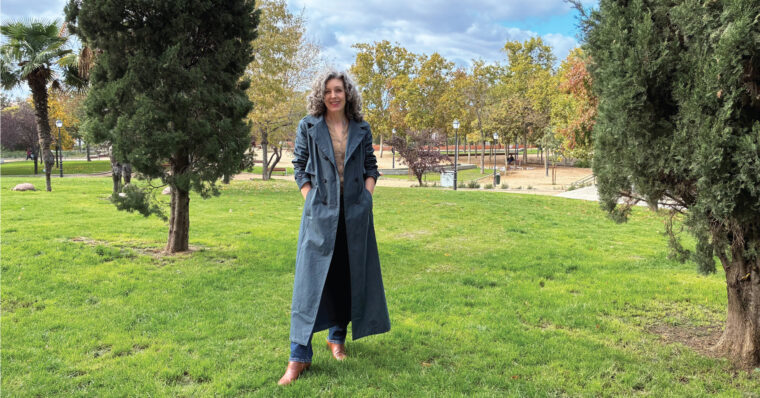
My sewing is usually inspired by an image, by which I mean, I have a tear sheet or a photo that inspires me, and I look for the pattern and the fabric to create it. (That’s why I make these posts: it’s how my mind works, and maybe it’s how some of you are inspired as well.) And that’s basically how my newest Prado Trench came to be, as well.
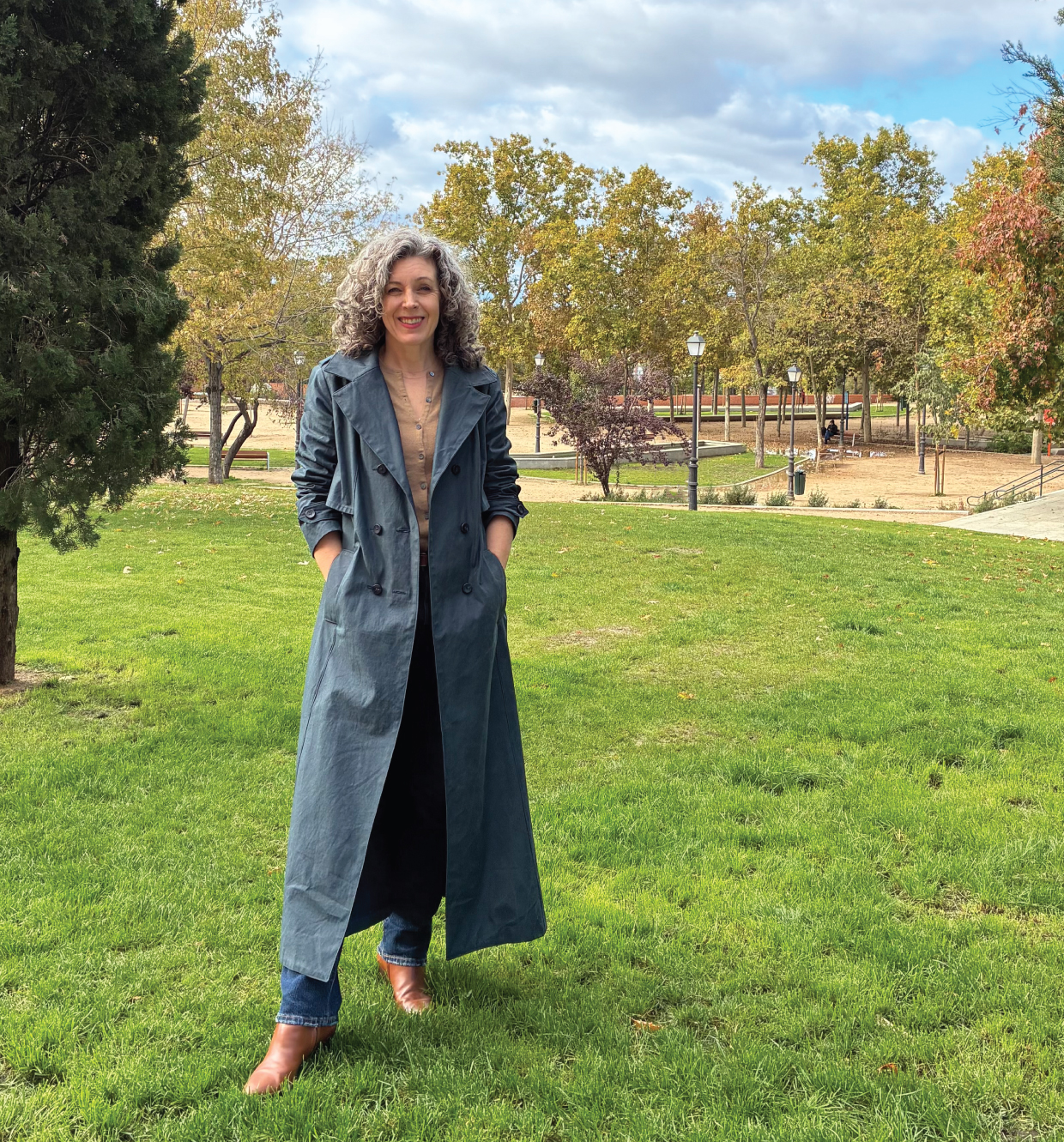
I was seeing a lot of very long, dark, oversized trench coats last fall and spring, and all of these adjectives are in my wheelhouse, so it didn’t take too long to decide there should be another Prado Trench Coat in my future. I set about looking for fabric and came across this gem at my current favorite online shop.
(Incidentally, deadstock fabric is such a treasure when you can find it. You can get amazing leftover designer fabrics and other fabrics you wouldn’t usually see in a fabric store, so keep your eyes open for shops that carry it! It’s not easy for shops because they usually can’t reorder it, so it’s a little inconvenient for them, but a treat for those of us who sew!) I’ve highlighted some fabrics on the Fabric Source list that carry it so you can find it more easily.
In any case, I was a little worried the fabric would be too heavy and stiff, but decided to take the risk because it looked so beautiful. However, when it arrived my concern deepened. Very heavy. Very stiff. I let the fabric sit for a while as I debated it. Most trench coats are quite lightweight and fluid. But in the end I decided to take the plunge and sew it as planned. After all, if I could sew a winter coat from this pattern, why not a heavier raincoat?
Next challenge: I decided to pre-wash the fabric before cutting, which is not something you can always do with a coated fabric (the risk of separating the fabric from the coating is always there). This was especially challenging because my kitchen sink is not big enough for 5 meters of stiff twill–I frankly wasn’t sure my tiny washing machine was up to the task, either. After cutting a swatch and attempting to destroy the coating by rubbing it quite ferociously with a sharp knife for a while (I like my risks to be a least a little premeditated, after all) I decided to abandon all remaining caution, and into the washing machine it went.
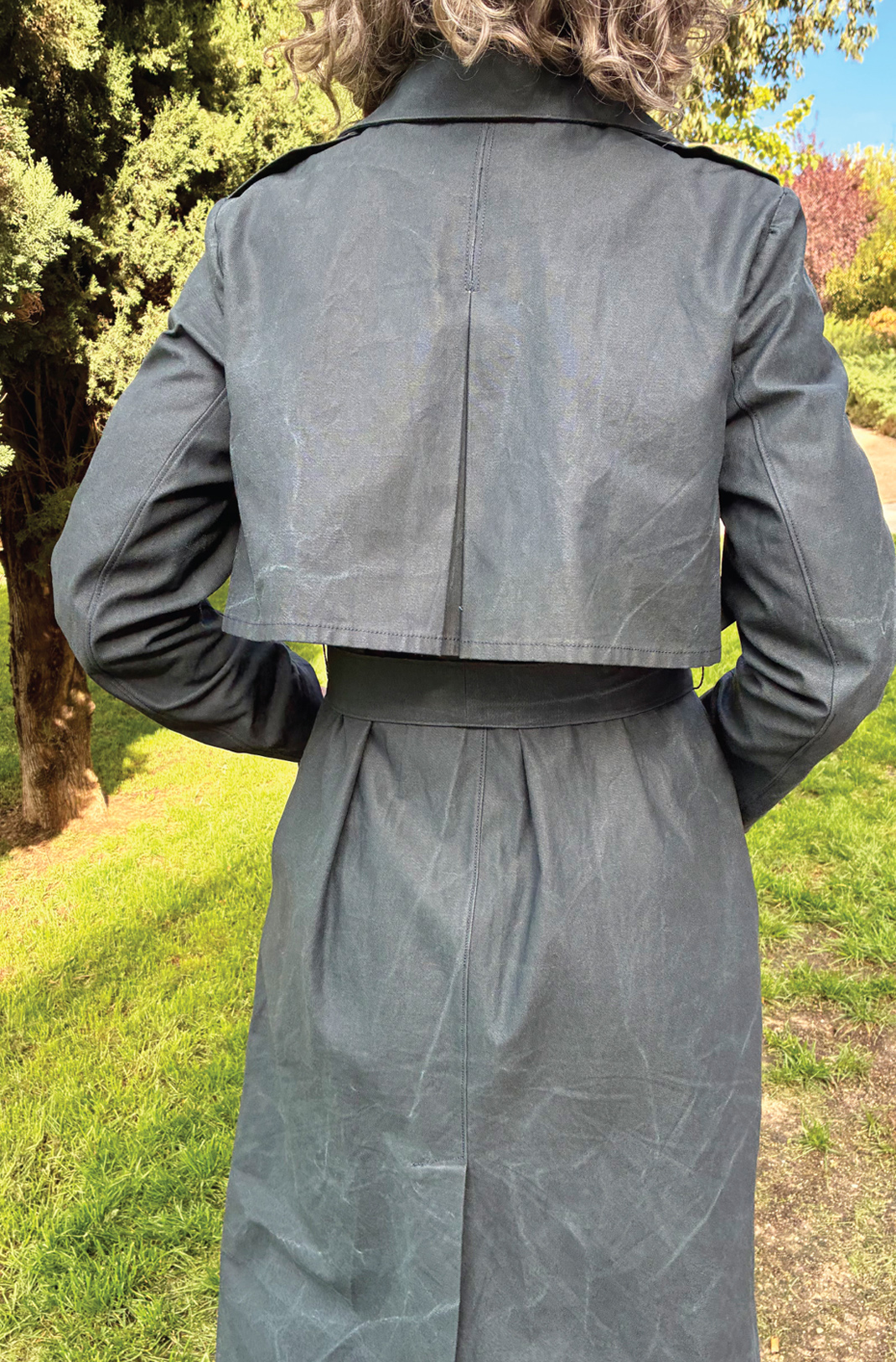
When it came out I was horrified. The deep, deep, almost-black navy bled so much I had to run my washing machine empty three more times to get it clean. And the color of the fabric itself had lightened much more than original. But the coated side–the outside–was still dark. The fabric itself is a poly-cotton twill, and under the coating the fabric had faded in places, with lines where it was folded in the machine. After more than a few deep breaths I decided to power through and cut it out. At this point, there was no turning back.
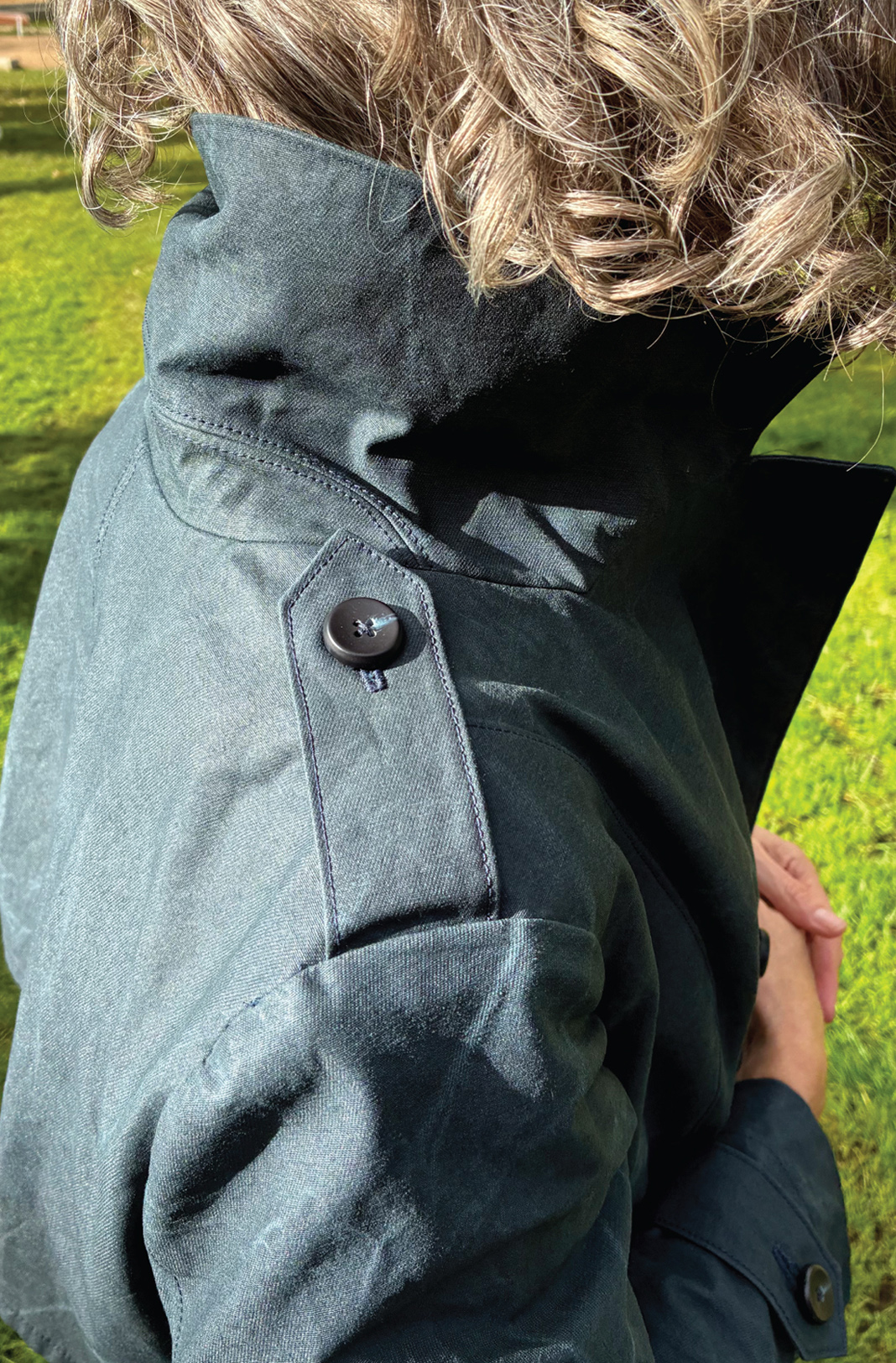
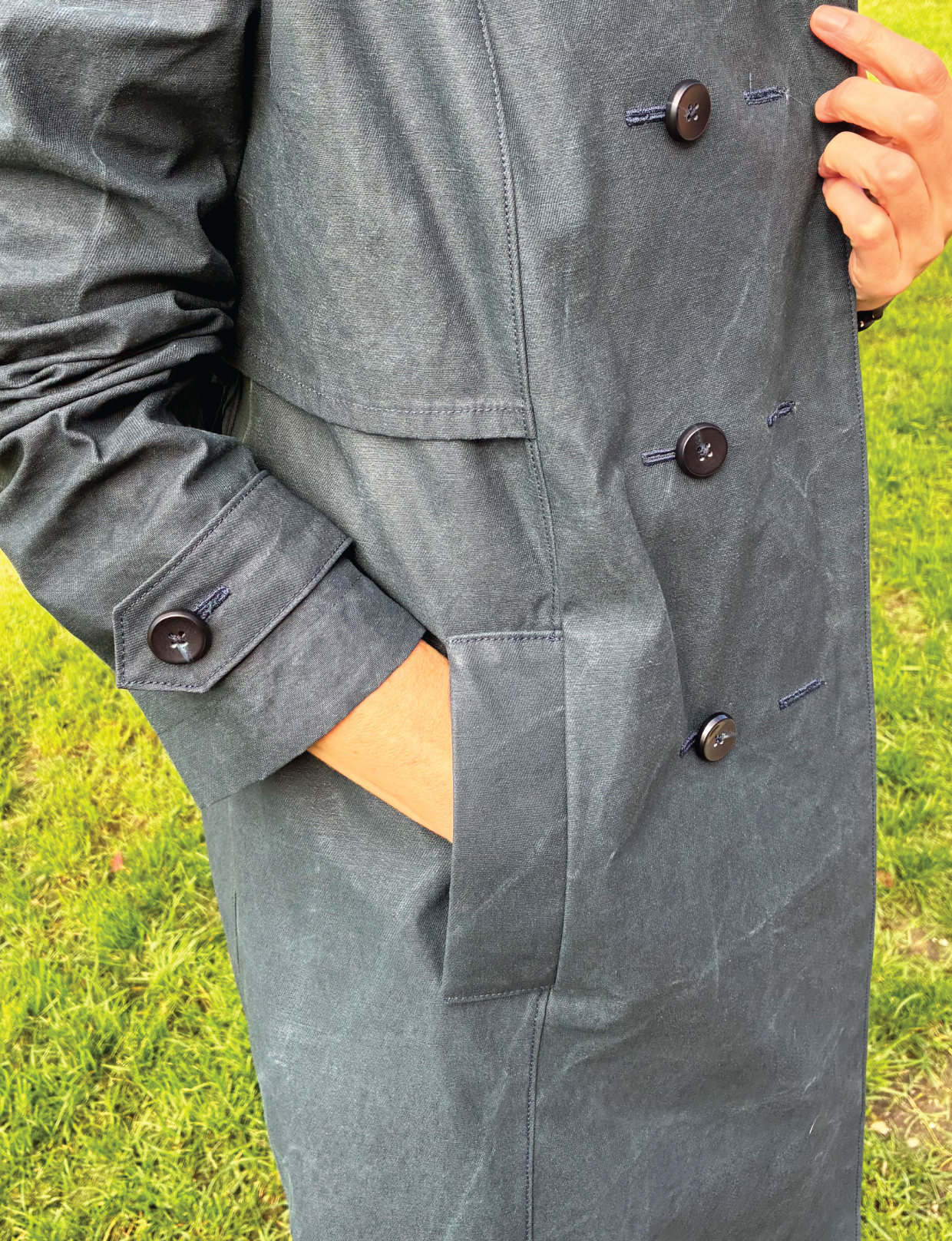
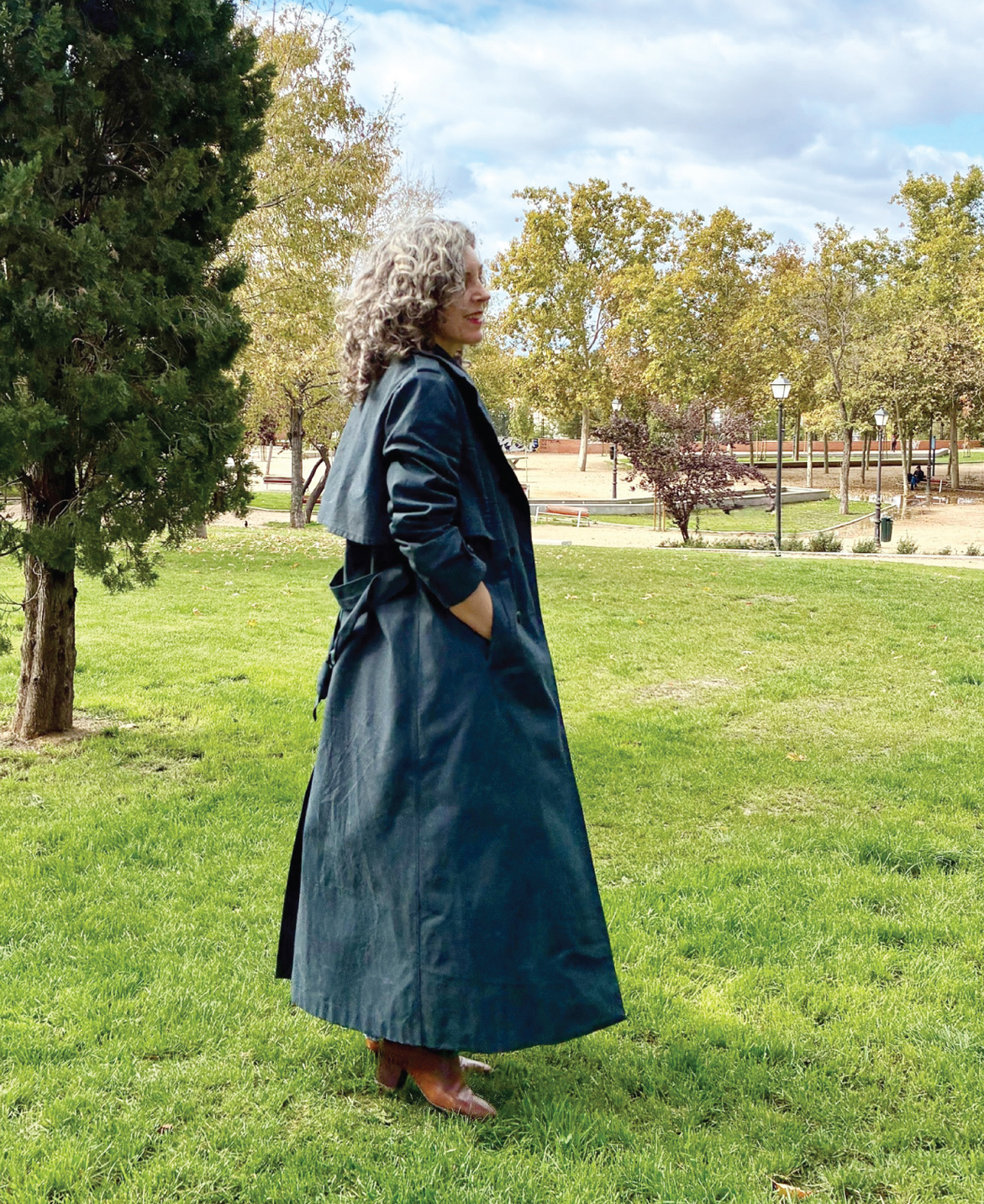
And I’m so glad I went ahead with it because I’m absolutely delighted with the result! I used a VERY stiff fusible interfacing for the collar and facings, and I’m thrilled I did because now the collar really stands up by itself when I want it to. I always recommend that you use an interfacing similar to the weight and feel of the fabric itself, and in this case I’m really glad I just trusted my instinct and did it despite the fact that the fabric was already quite stiff. (I guess the entire coat is just one big trust of instinct vs. common sense?)
Oh, and I just happened to find a large spool of topstitching thread in my bin that was exactly the right color for this project, so don’t credit me for that lucky accident, either. I’m telling you, just instinct on this one.
The coat substantial, but so is my beloved winter coat I made with the pattern, which my dear daughter has stolen/borrowed to wear in Copenhagen this fall. (She needs it more than I do, with the weather there!) Incidentally, she told me she gets loads of compliments on it and loves telling people her COOL mom made it. If she asks for three more, I’ll drop everything to make them for her after that compliment!
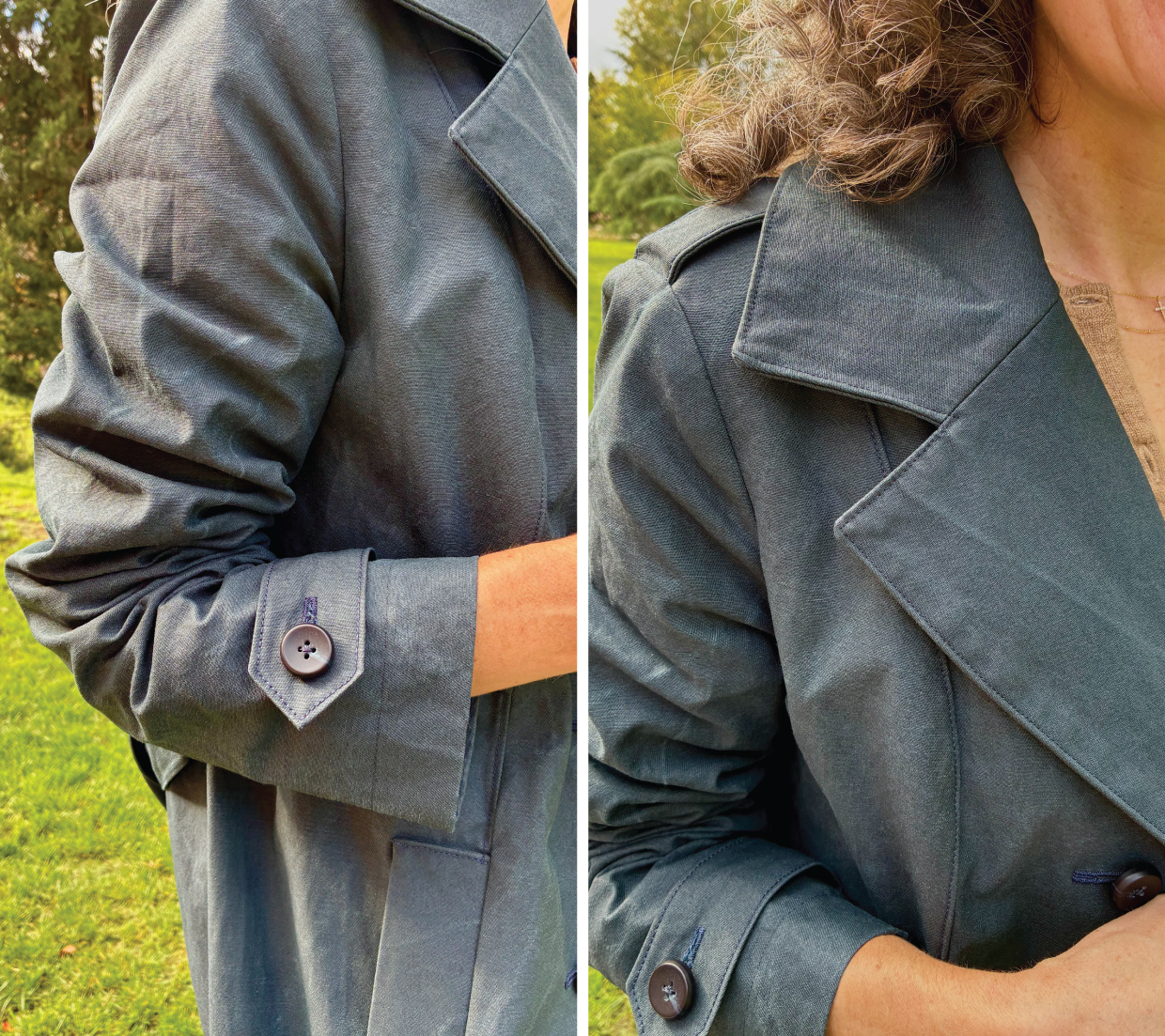
You can see the fade lines in the fabric from where it was folded in my washing machine. In my mind they look almost like worn denim, so I actually like the results. And I’m eager to see how they age with wear.
Because this fabric is heavier, I’m finding that it’s an excellent jacket for that tricky in-between weather when a light jacket isn’t enough and a full winter coat is too much. I suspect I’ll be wearing it a lot here in Madrid–our nights can get cold, but the days tend to be warmer, and I often find that a full winter coat is a bit too much for me.
Have you tried this pattern yet? It’s really fun, and not hard to make. It’s more of a time investment, but with a few hours here and there you’ll be surprised how quickly it takes form. And what a satisfying project it is!
You can pick up your own Prado Trench Coat sewing pattern here. Maybe we’ll see each other, wearing them!